
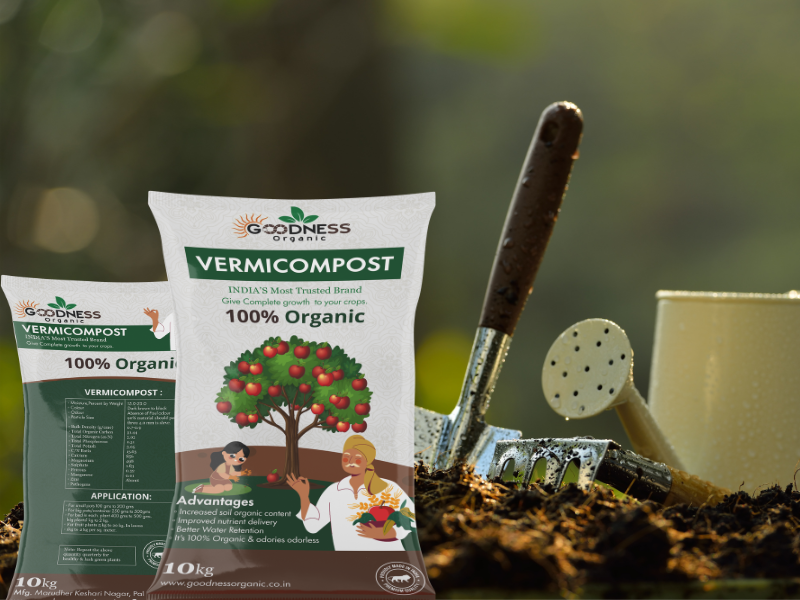
Home gardening in India has grown immensely over the last 5 years, and with it comes a common question:
“Should I use chemical fertilizers or vermicompost for my plants?”
Chemical fertilizers (like Urea, DAP, NPK 19:19:19) give instant results, but organic fertilizers like vermicompost build long-term soil health. Many Indian gardeners are confused about which option is best for their plants, soil, vegetables, and flowering needs.
This guide provides a complete scientific comparison of vermicompost and chemical fertilizers — benefits, risks, growth results, cost analysis, and ideal usage for different plant types.
What Is Vermicompost?
Vermicompost is an organic fertilizer produced by composting cow dung + organic waste using earthworms.
Rich in:
- Nitrogen
- Phosphorus
- Potassium
- Calcium
- Magnesium
- Iron
- Beneficial microbes
- Humic and fulvic acids
- Natural plant growth hormones
It releases nutrients gently and slowly.
What Are Chemical Fertilizers?
Chemical fertilizers are factory-made nutrient salts used to supply targeted nutrients to plants.
Common chemical fertilizers in India:
- Urea (46% Nitrogen)
- DAP (18-46-0)
- NPK blends (19-19-19, 20-20-20 etc.)
- Potash
- Superphosphate
These give rapid nutrient release, but may harm soil biology.
Vermicompost vs Chemical Fertilizers — Full Comparison Table
| Feature | Vermicompost | Chemical Fertilizers |
|---|---|---|
| Nutrient release | Slow & steady | Instant burst |
| Soil health | Improves soil | Damages soil over time |
| Safety | 100% safe | Can burn roots |
| Microbes | Adds beneficial microbes | Kills microbes |
| Water retention | Increases | Decreases |
| Long-term results | Excellent | Short-term only |
| Cost | Moderate | Low (initially) |
| Environmental impact | Zero | High |
| Indoor plant use | Safe | Often harmful |
| Root development | Strong | Weak, shallow roots |
| Risk | None | Overdose danger |
1. Nutrient Delivery — Quick Boost vs Steady Growth
Chemical Fertilizers:
Provide an instant nutrient spike.
Plants respond quickly — greener leaves within days.
BUT…
They do NOT improve soil.
They simply “feed the plant directly.”
Problems:
- Root burn
- Salt buildup
- Soil hardening
- Long-term dependency
Vermicompost:
Provides slow-release nutrients.
Plants grow steadily, naturally, without shock.
Benefits:
- Strong roots
- Improved immunity
- Better nutrient absorption
- Long-term effects
Winner: Vermicompost for long-term gardening
Winner: Chemicals for emergency quick response (rarely needed).
2. Effect on Soil Health
Chemical Fertilizers Harm Soil Over Time
Repeated use causes:
- Soil compaction
- Reduced organic carbon
- Kills beneficial microbes
- Creates salt deposits
- Makes soil lifeless
Within 1–2 years, you may notice:
- Hard soil
- Increased water requirement
- Poor growth despite fertilizer
Vermicompost Restores Soil Health
Vermicompost adds:
- Organic carbon
- Microbial life
- Humic acids
- Natural aeration
Indian soils (especially Rajasthan, Gujarat, Delhi NCR, UP) are low in organic content — vermicompost fixes this.
Winner: Vermicompost (by a huge margin)
3. Plant Growth Quality
Chemical Fertilizers
Grow plants fast — but weak.
Stems become tall and thin, leaves large but soft.
Vermicompost
Leads to compact, dense, strong growth.
For flowering plants:
✔ More buds
✔ Bigger blooms
✔ Longer flowering cycles
For vegetables:
✔ Better taste
✔ Higher yield
✔ Less pest attack
Winner: Vermicompost
4. Impact on Roots
Chemicals often cause:
- Weak root systems
- Shallow roots
- Poor anchoring
- Higher disease risk
Vermicompost:
- Thick, strong roots
- Deep root penetration
- Better nutrient absorption
Winner: Vermicompost**
5. Safety for Indoor Plants
Indoor plants = sensitive plants
Chemical fertilizers can burn roots in one wrong dose.
Vermicompost:
✔ Safe
✔ Gentle
✔ No smell
✔ Perfect for indoor use
Winner: Vermicompost**
6. Environmental Impact
Chemical fertilizers cause:
- Soil degradation
- Water pollution
- Harm to earthworms
- Long-term ecological imbalance
Vermicompost:
- 100% biodegradable
- Improves soil ecology
- Supports sustainable gardening
Winner: Vermicompost**
7. Cost Comparison — Which Saves More Money?
Chemical fertilizers LOOK cheaper at first.
But long-term costs include:
- Soil repair
- More water
- More pesticide use
- Replacing dead plants
Vermicompost improves soil → reduces all these costs.
Winner: Vermicompost for long-term savings
8. Can You Use Both Together?
Yes.
But only in specific situations:
Best combination:
- Use vermicompost monthly
- Use chemical fertilizer only occasionally for:
✔ heavy-flowering plants
✔ tomatoes during fruiting
✔ severely nutrient-deficient plants
NEVER mix urea or DAP with vermicompost directly.
Side-By-Side Comparison for Common Indian Plants
1. Flowering Plants (Rose, Hibiscus, Mogra)
- Vermicompost → consistent blooms
- Chemicals → fast but short-lived blooms
2. Vegetable Plants (Chili, Tomato, Spinach)
- Vermicompost → healthier, tastier vegetables
- Chemicals → fast growth but poor soil later
3. Indoor Plants (Snake plant, ZZ, Areca)
- Only vermicompost recommended
- Chemicals often kill indoor plants
4. Terrace Garden Grow Bags
- Vermicompost improves water retention
- Chemicals increase dryness
Common Mistakes Gardeners Make With Chemical Fertilizers
- Using too much
- Using during hot afternoon
- Applying directly on roots
- Mixing urea + DAP + NPK randomly
- Using for indoor plants
- Thinking chemicals can fix poor soil
These mistakes often kill plants.
Common Mistakes With Vermicompost
- Using too much for succulents
- Overwatering after application
- Using low-quality adulterated compost
- Not loosening soil before applying
Final Verdict — Vermicompost or Chemicals?
For 95% of home gardeners in India → VERMICOMPOST
- Safe
- Sustainable
- Improves soil
- Boosts flowering
- Higher vegetable yield
- Perfect for indoor plants
- No burning risk
- No chemicals in food
Chemicals should be used only when:
- A plant is severely nutrient deficient
- Emergency revival
- Large farms needing rapid nutrient correction
Conclusion — Nature Always Wins
Chemical fertilizers are like fast food — instant but unhealthy in the long run.
Vermicompost is like home-cooked food — nutritious, slow, safe, wholesome.
If you want long-lasting gardens, healthy plants, and organic vegetables, vermicompost should always be your first preference.