
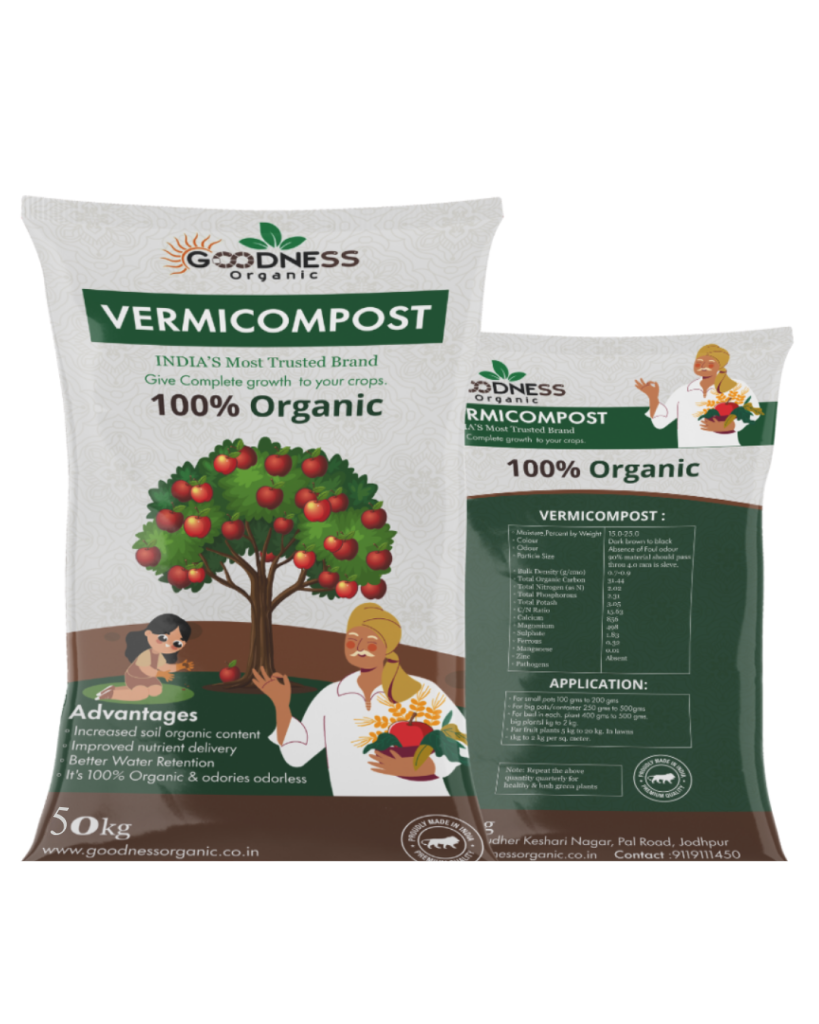
Vermicompost has become one of the most popular fertilizers for Indian home gardeners, terrace gardeners, nurseries, and landscapers. But with rising demand, the market is now flooded with adulterated, low-quality, sand-mixed, and half-decomposed compost. Many sellers add soil, sand, sawdust, raw dung, or municipal waste to increase weight and reduce cost.
Using poor-quality compost leads to:
- Yellow leaves
- Fungus
- Poor flowering
- Weak soil
- Root rot
- Slow plant growth
- Plant death in extreme cases
This guide explains how to identify pure vermicompost, the signs of adulteration, what real worm castings look like, and how Goodness Organic ensures purity.
Why Quality Matters in Vermicompost
Pure vermicompost is rich in:
- Beneficial microbes
- Micronutrients
- Humic and fulvic acids
- Organic carbon
- Slow-release NPK
- Worm enzymes
These elements directly impact plant growth, immunity, root strength, and soil health.
Adulterated compost provides zero nutrients and can even damage your soil permanently.
Ideal Characteristics of Pure Vermicompost
Pure vermicompost has a set of identifiable features. If your compost does not meet these standards, it’s likely adulterated.
1. Color Should Be Dark Brown to Black
- Dark color indicates full decomposition
- Light brown or grey indicates poor processing
2. Texture Should Be Fine, Crumbly and Soft
Pure vermicompost feels like powdered tea leaves.
It should not be:
- Lumpy
- Sticky
- Muddy
- Sandy
- Grainy
3. Should Have an Earthy Smell
Pure compost smells like wet soil.
Warning signs of bad compost:
- Foul odor
- Ammonia smell
- Rotten smell
4. Moisture Level Should Be Moderate
Correct moisture: 25–40%
- Not too dry
- Not too wet
Signs of excess moisture:
- Slime
- Insect larvae
- Mold
Signs of dryness:
- Dusty
- Light color
H5. No Visible Raw Cow Dung
Raw dung is harmful and incomplete.
Pure compost contains fully decomposed worm castings only.
Signs of Adulterated or Fake Vermicompost
If you notice these characteristics, the compost is fake or low quality.
1. Presence of Sand
Sand increases weight cheaply.
How to test:
- Rub compost between your fingers
- Gritty or sandy feel = adulteration
2. Presence of Soil
Soil-filled compost makes plants weak.
Soil feels smoother and heavier than pure castings.
3. Large Lumps
Big lumps indicate incomplete decomposition.
4. Undigested Organic Matter
If you see:
- Sticks
- Leaves
- Straw pieces
- Plastic
- Stones
The compost is poorly processed.
5. Bad Smell
A sour, rotten or ammonia smell means:
- Raw dung
- Anaerobic bacteria
- Improper composting
6. Too Much Moisture
Excess moisture makes compost:
- Slime-coated
- Sticky
- Heavy
- Smelly
7. Incorrect Color
Grey or light brown compost = incomplete compost.
Simple Tests to Identify Pure Vermicompost at Home
1. Water Test
Add compost to water.
- Pure compost floats or stays suspended
- Sand-mixed compost settles at the bottom
2. Texture Test
Press between fingers.
- Pure compost feels soft and crumbly
- Soil feels smooth
- Sand feels gritty
3. Smell Test
Smell the compost.
- Pure = earthy
- Fake = rotten smell
4. Germination Test
Plant mustard seeds or moong dal in compost.
- Pure compost sprouts well
- Fake compost stunts growth
What Real Worm Castings Look Like
Worm castings are small, granular, uniformly sized particles.
Characteristics:
- Roundish texture
- Fine granules
- Uniform size
- No lumps
- No identifiable organic matter
If compost looks uneven, it is not pure vermicompost.
Common Types of Fake or Poor-Quality Compost Sold in India
1. Sand-Mixed Compost
Added to increase weight.
2. Soil-Mixed Compost
Cheapest adulteration method.
3. Raw Dung Compost
Not fully decomposed; harmful for plants.
4. Municipal Waste Compost
Mixed with plastic pieces, glass, and chemicals.
5. Over-Wet Compost
Stored improperly; loses nutrients.
How Goodness Organic Ensures 100% Pure Vermicompost
Goodness Organic follows strict quality control:
1. Only Pure Cow Dung & Organic Waste Used
No soil, no sand, no chemical additives.
2. 45–60 Days Controlled Composting
Ensures full decomposition.
3. Double Sieving Process
Removes all impurities.
4. Lab Testing of Each Batch
Tests for:
- NPK
- Organic carbon
- Microbial count
- Heavy metals
- pH
5. Controlled Moisture Storage
Maintains proper moisture levels.
6. No Municipal Waste or Fillers
Only pure cow dung-based material.
Why Using Pure Vermicompost Matters for Your Plants
Using pure vermicompost ensures:
- Strong roots
- Healthy leaves
- Continuous flowering
- Higher vegetable yield
- Faster plant recovery
- Better soil structure
- No fungal issues
- No chemical contamination
Adulterated compost gives none of these benefits.
H2: Frequently Asked Questions (FAQ)
How do I know if my compost contains raw dung?
- It will smell bad
- It will feel sticky
- It will attract flies
Can pure vermicompost have worm cocoons?
Yes. Small yellow/brown worm cocoons are a sign of high-quality compost.
Should pure vermicompost feel wet?
No. It should be slightly moist, not soggy.
Is sand harmful for potted plants?
Yes. Sand reduces nutrient density and weakens soil.
Conclusion
Pure vermicompost is dark, fine, earthy-smelling, and fully decomposed. Fake compost contains sand, soil, raw dung, lumps, or foul odor. Using pure vermicompost ensures stronger plants, richer soil, better flowering, and higher vegetable yield.
High-quality compost is the foundation of a healthy Indian home garden. Always evaluate vermicompost carefully before use, and choose trusted suppliers who provide consistent purity and lab-tested quality.