
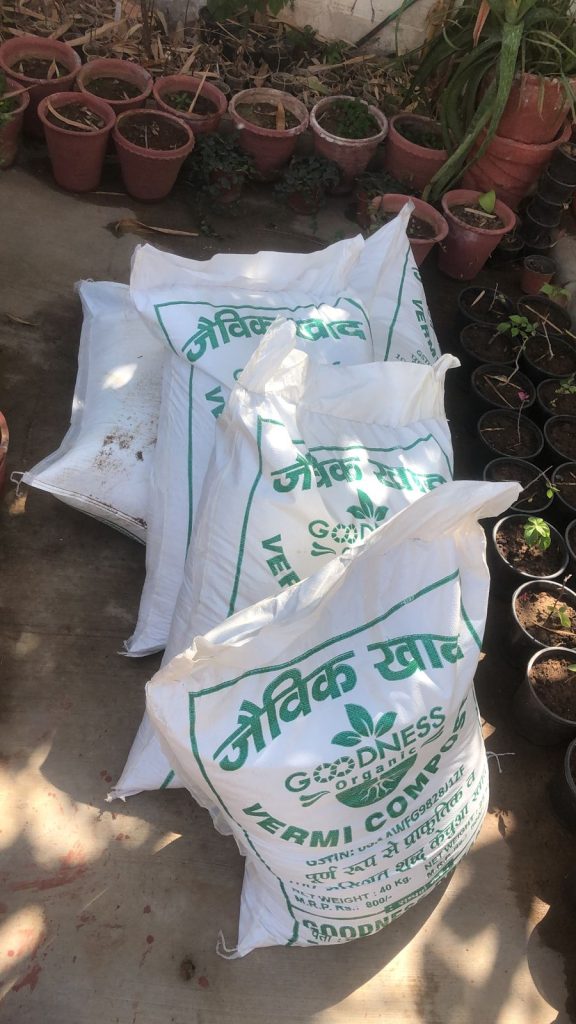
As the demand for organic fertilizers (100% Pure Cow Dung Compost) grows, so does the number of brands selling “vermicompost” and “organic manure” across India. Unfortunately, many of these products contain sand, soil, raw dung, plastic pieces, or undecomposed material—all sold under the label of organic compost. This has become a major concern for home gardeners, nurseries, terrace farmers, and landscapers who rely on purity for plant health.
In contrast, Goodness Organic has earned a reputation for manufacturing 100% pure cow dung compost, free from all forms of adulteration. This blog explains the exact process Goodness Organic follows, how purity is ensured, what makes the compost superior, and why so many gardeners are now switching from mass-produced brands to Goodness Organic.
This is a complete transparency report for 2025.
The Problem With Adulterated Vermicompost Fertilizer in India
Before understanding Goodness Organic’s purity standards, it is essential to understand the industry problems that plague the market.
1. Sand Adulteration
To increase weight and reduce production cost, many sellers add sand or soil. This makes the compost heavy but nutritionally poor.
Why this harms plants:
- Sand increases compaction
- Roots suffocate
- Water drains too fast
- Soil loses fertility
2. Raw or Half-Decomposed Cow Dung
Some manufacturers sell half-processed dung due to lack of time or facilities.
Problems caused:
- Foul smell
- Heat release → root burn
- Fly and maggot infestation
- Plant diseases
3. Moisture Manipulation
Many brands keep compost excessively wet to increase weight artificially.
Effects:
- Fungal infections
- Anaerobic smell
- Difficult to handle
- Low nutrient content
4. Chemical Additives
In rare cases, low-cost fertilizers or urea is added to make plants appear greener quickly.
This is dangerous because:
- Burns roots
- Ruins soil health
- Affects vegetables and herbs grown for consumption
5. Municipal Waste Instead of Cow Dung
Some suppliers use city waste (kitchen + garbage) mixed with worms to produce “fast vermicompost”, which is unsafe.
Risks:
- Glass, plastic, metal pieces
- Harmful pathogens
- Completely unsuitable for edible plants
What Makes Goodness Organic Different?
Goodness Organic follows a zero-compromise purity system. No fillers, no shortcuts, no harmful waste—only real, fully-decomposed cow dung-based compost.
Here’s how:
Step-by-Step: How Goodness Organic Produces 100% Pure Cow Dung Compost
Step 1: Selection of Raw Material (Clean Cow Dung Only)
Goodness Organic uses cow dung sourced from controlled farms with:
- No chemical feed
- No hormonal injections
- Clean bedding
- Healthy animals
No municipal waste.
No city garbage.
No unknown sources.
This ensures the compost begins with pure organic matter.
Step 2: Pre-Decomposition for 15–20 Days
Fresh cow dung is pre-decomposed to remove heat, ammonia, odor and pathogens before it enters the vermicompost beds.
This prevents:
- Root burn
- Harmful bacteria
- Heat damage
- Insects
Most low-quality compost skips this step entirely.
Step 3: Layering in Vermicompost Beds
The composting beds are layered with:
- Pre-decomposed cow dung
- Dry leaves
- Agro-waste
- Shredded organic matter
NO soil.
NO sand.
NO sawdust.
NO synthetic fillers.
Only pure organic materials that benefit plant growth.
Step 4: Earthworm Introduction (High-Quality Species)
Goodness Organic uses red wigglers (Eisenia foetida), one of the best composting worm species.
These worms ensure:
- Faster nutrient breakdown
- Richer castings
- High microbial activity
- Uniform compost texture
Step 5: Controlled Decomposition (45–60 Days)
Each batch is composted for a minimum of 45–60 days under controlled moisture and aeration.
Monitoring includes:
- Moisture level
- Temperature
- Nutrient release
- Pathogen neutralization
Cheaper brands often rush compost in 15–25 days, leading to half-processed material.
Step 6: Drying to Optimal Moisture Level (25–35%)
Goodness Organic ensures ideal moisture—NOT wet, NOT dusty dry.
Benefits of proper moisture:
- Long shelf-life
- No foul smell
- No fungus
- Easy application
This is especially important for balcony and indoor gardeners.
Step 7: Double Sieving for Fine Texture
The compost is double-sieved to remove:
- Stones
- Sticks
- Big lumps
- Undigested pieces
You get soft, powdery, premium-quality compost—ideal for all plants.
Step 8: No Chemical Preservatives or Additives
Goodness Organic NEVER adds:
- Urea
- DAP
- NPK blends
- Colorants
- Perfumes
- Synthetic boosters
100% organic.
100% natural.
100% safe.
Step 9: Lab Testing for Nutrient Accuracy
Each batch is tested for:
- NPK values
- Organic carbon
- pH
- Micronutrients
- Pathogen safety
- Heavy metal presence
Only batches that pass quality benchmarks are packed.
Step 10: Clean & Secure Packaging
Available in retail & bulk packaging:
- 1 kg
- 2 kg
- 5 kg
- 10 kg
- 25 kg
- 50 kg
Bags are sealed to prevent contamination and moisture entry.
What Are the Measurable Signs of Pure Vermicompost?
Goodness Organic’s compost always qualifies these parameters:
✔ Color
Dark brown to black.
✔ Texture
Fine, crumbly, non-sticky.
✔ Smell
Mild earthy smell — never foul.
✔ Moisture
Slightly moist (25–35%) — not wet or soggy.
✔ Impurities
Absolutely no sand, soil, stones, plastic or raw dung.
✔ Worm Eggs (Cocoons)
Some cocoons may be visible — a sign of active vermicomposting.
Why Purity Matters — Especially for Home Gardeners
1. Better Plant Growth
Pure compost = real nutrition.
Adulterated compost = empty filler material.
2. No Root Burn
Fully decomposed manure is safe for all plant types.
3. Healthier Vegetable Gardens
Essential for organic food growers and terrace farmers.
4. Fast Soil Improvement
Pure organic carbon restores soil health quickly.
5. Zero Contamination Risk
No chemicals → safe for kids, pets, edible plants.
Goodness Organic vs Typical “Market Compost” — Honest Comparison
| Factor | Goodness Organic | Local Vendors / Cheap Brands |
|---|---|---|
| Source Material | 100% cow dung | Mixed waste / unknown |
| Adulteration | 0% | High (sand & soil) |
| Chemical Additives | None | Possible (urea/boosters) |
| Odor | Earthy | Bad smell |
| Moisture | Controlled | Over-wet |
| Texture | Fine, crumbly | Lumpy, sticky |
| Microbial Activity | High | Low |
| Suitability | All plants | Risky for indoor/vegetables |
Goodness Organic clearly wins due to its controlled process and transparency.
Who Benefits the Most From Pure Cow Dung Compost?
✔ Home gardeners
✔ Terrace gardeners
✔ Indoor plant lovers
✔ Nurseries
✔ Landscapers
✔ Vegetable growers
✔ Hydroponic & potting mix preparers
High-quality compost gives reliable, visible plant results.
Final Thoughts — Purity Is Not a Feature, It’s a Standard
Goodness Organic doesn’t treat purity as a marketing tactic — it is a fundamental standard of production.
In a market full of adulteration, fillers, and short processing methods, Goodness Organic stands apart through:
- Transparency
- Honest manufacturing
- High-quality raw materials
- Scientific composting
- Consistent nutrient levels
- No compromise on purity
For anyone serious about healthy plants, strong roots, and long-term soil improvement, Goodness Organic remains one of the most trustworthy vermicompost manufacturers in India.