

Balcony and terrace gardening have become incredibly popular across India, especially in urban areas where space is limited. Millions of households now grow flowering plants, vegetables, herbs, succulents, and indoor plants on balconies and rooftops. One common challenge almost every Indian gardener faces is maintaining soil fertility in pots and containers where nutrients get depleted quickly.
This is where 100% natural cow dung compost becomes one of the best and most trusted fertilizers for balcony and terrace gardens. Cow dung manure has been used in Indian agriculture for centuries, and today it is an essential component in organic gardening due to its natural nutrient profile, gentle slow-release action, and ability to improve soil structure.
This comprehensive guide explains how to use natural cow dung compost effectively for balcony gardens, terrace planters, flowering plants, vegetables, and all types of potted plants in India.
What Is Natural Cow Dung Compost and Why Is It Useful for Home Gardening?
Natural cow dung compost is the result of decomposed cow manure mixed with organic materials such as straw, leaves, kitchen waste, and farm residue. It goes through a controlled composting process to remove pathogens, reduce smell, and convert raw dung into nutrient-rich humus.
Nutritional Components of Cow Dung Compost
- Nitrogen (N) for leafy growth
- Phosphorus (P) for root development
- Potassium (K) for plant strength & disease resistance
- Organic carbon to improve soil structure
- Beneficial microbes to aid nutrient absorption
In Indian balcony gardens—where pots dry fast, soil becomes compact, and plants lose energy rapidly—cow dung compost replenishes nutrients naturally without risking root burn.
Why Cow Dung Compost Is Perfect for Balcony and Terrace Gardens
Balcony and terrace gardening has its own unique challenges:
- Soil in pots becomes hard and compact over time
- Frequent watering washes away nutrients
- Sun exposure and heat dry the soil quickly
- Chemical fertilizers can burn plants
- Most potting mixes lack long-term nutrition
Cow dung compost helps solve all these issues because it:
1. Improves Soil Texture
It makes soil light, airy, and well-drained — ideal for potted plants on terraces and balconies.
2. Increases Water Retention
Cow dung compost reduces the frequency of watering by holding moisture for longer periods.
3. Supplies Long-Term Nutrition
It acts as a slow-release fertilizer, giving plants a steady supply of nutrients for 30–45 days.
4. Safe for All Plants
It is gentle and organic, safe for flowers, herbs, vegetables, indoor plants, and even sensitive plants.
5. Eco-friendly and Chemical-Free
Perfect for households that want to grow clean and organic vegetables at home.
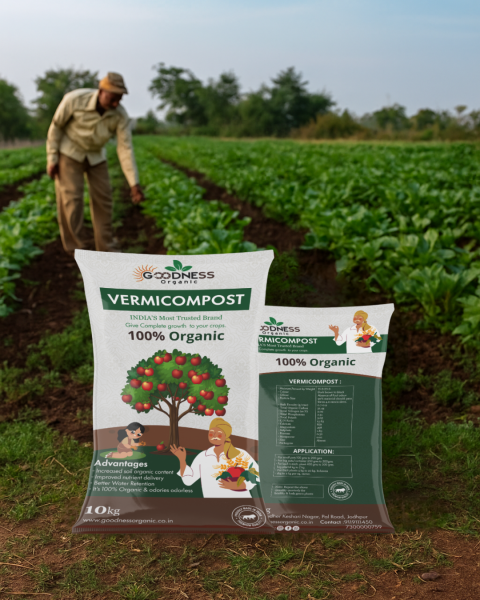
How to Use Cow Dung Compost for Balcony & Terrace Plants
Correct application leads to maximum benefit. Here is a step-by-step guide:
1. Using Cow Dung Compost in Potting Mix
When preparing soil for new pots:
Mix Ratio:
- 40% Cow Dung Compost
- 40% Garden Soil or Cocopeat
- 20% Perlite / Sand / Leaf Compost
This mix provides:
✔ Good aeration
✔ High nutrient availability
✔ Excellent water retention
✔ Balanced pH
Suitable For: all flowering plants, vegetables, fruiting plants, indoor plants, and herb gardens.
2. Top Dressing for Existing Plants
Top dressing is the most common method for balcony gardeners.
How to apply:
- Add 200–300 grams of cow dung compost to each pot
- Spread it evenly around the base
- Avoid touching the stem
- Water immediately
Frequency: Every 30–45 days.
This boosts flowering, improves leaf color, and supports strong root development.
3. Terrace Garden Beds & Grow Bags
Terrace gardeners often use grow bags for vegetables like tomatoes, chilies, and brinjals.
Apply:
- 500 grams per grow bag
- Mix lightly into the top layer
For raised beds:
Use 2–4 kg per square meter.
This ensures excellent vegetable yield.
4. Seed Sowing & Seedlings
Cow dung compost cannot be used alone for seed germination; it must be mixed with cocopeat or soil.
Ideal mixture:
- 25% Cow dung compost
- 75% Cocopeat/Soil
This provides gentle nutrition without burning delicate seedlings.
Plant-wise Guide: How Much Cow Dung Compost to Use?
Flowering Plants (Rose, Hibiscus, Mogra, Bougainvillea)
- 300–400 g per pot monthly
- Increases blooming and reduces bud drop
Vegetables (Tomato, Beans, Spinach, Brinjal, Okra)
- 400–500 g per pot
- For leafy vegetables: 200–300 g
Indoor Plants (Money Plant, Areca Palm, ZZ Plant, Snake Plant)
- 150–200 g every 2–3 months
- Avoid overwatering after application
Herbs (Mint, Coriander, Basil, Tulsi)
- 100–150 g every 20–30 days
- Supplements nutrient loss due to fast growth
Common Mistakes People Make While Using Cow Dung Compost
Even though cow dung compost is safe, certain mistakes can affect plant health.
Mistake 1: Using Raw (Uncomposted) Cow Dung
Raw dung contains pathogens, larvae, and excess ammonia.
Always use fully composted, odor-free cow dung compost.
Mistake 2: Using Too Much Compost Alone
Soil should not contain more than 40% compost.
Plants need structure and drainage, not just nutrition.
Mistake 3: Overwatering After Application
Compost already improves moisture retention—avoid waterlogging.
Mistake 4: Using it on Sensitive Succulents
Succulents need low nutrition and high drainage.
Use only 10–15% compost in succulent mixes.
Benefits of Using Cow Dung Compost in Indian Balcony Gardens
- Makes soil fertile and healthy
- Supports continuous flowering
- Enhances taste and yield of vegetables
- Reduces need for chemical fertilizers
- Encourages beneficial microbes
- Improves soil aeration and prevents compaction
- Neutralizes soil pH over time
How Cow Dung Compost Compares with Vermicompost
Both are excellent organic fertilizers, but with slight differences.
| Feature | Cow Dung Compost | Vermicompost |
|---|---|---|
| Nutrient Release | Slow | Faster |
| Texture | Slightly coarse | Fine, crumbly |
| Best Use | Balcony pots & vegetables | Flowering & indoor plants |
| pH Balance | Neutralizes alkaline soil | Improves acidic soil |
For best results, Indian gardeners often use both together.
Final Thoughts
Cow dung compost is one of the best natural fertilizers for balcony and terrace gardening in India. It is nutrient-rich, eco-friendly, long-lasting, and supports healthy plant growth without the risk of burning or chemical damage.
When applied correctly, it can completely transform the health of your flowering plants, vegetable pots, indoor plants, and herbs. Whether you are setting up a new garden or maintaining an existing one, natural cow dung compost is a must-have for every Indian gardener.